Introduction
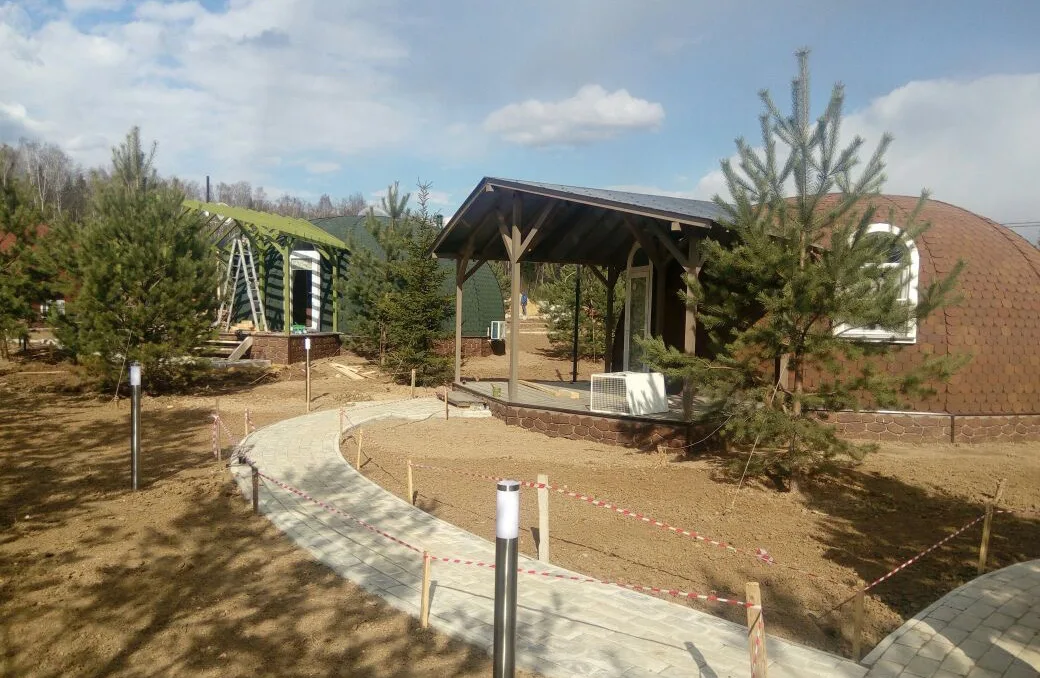
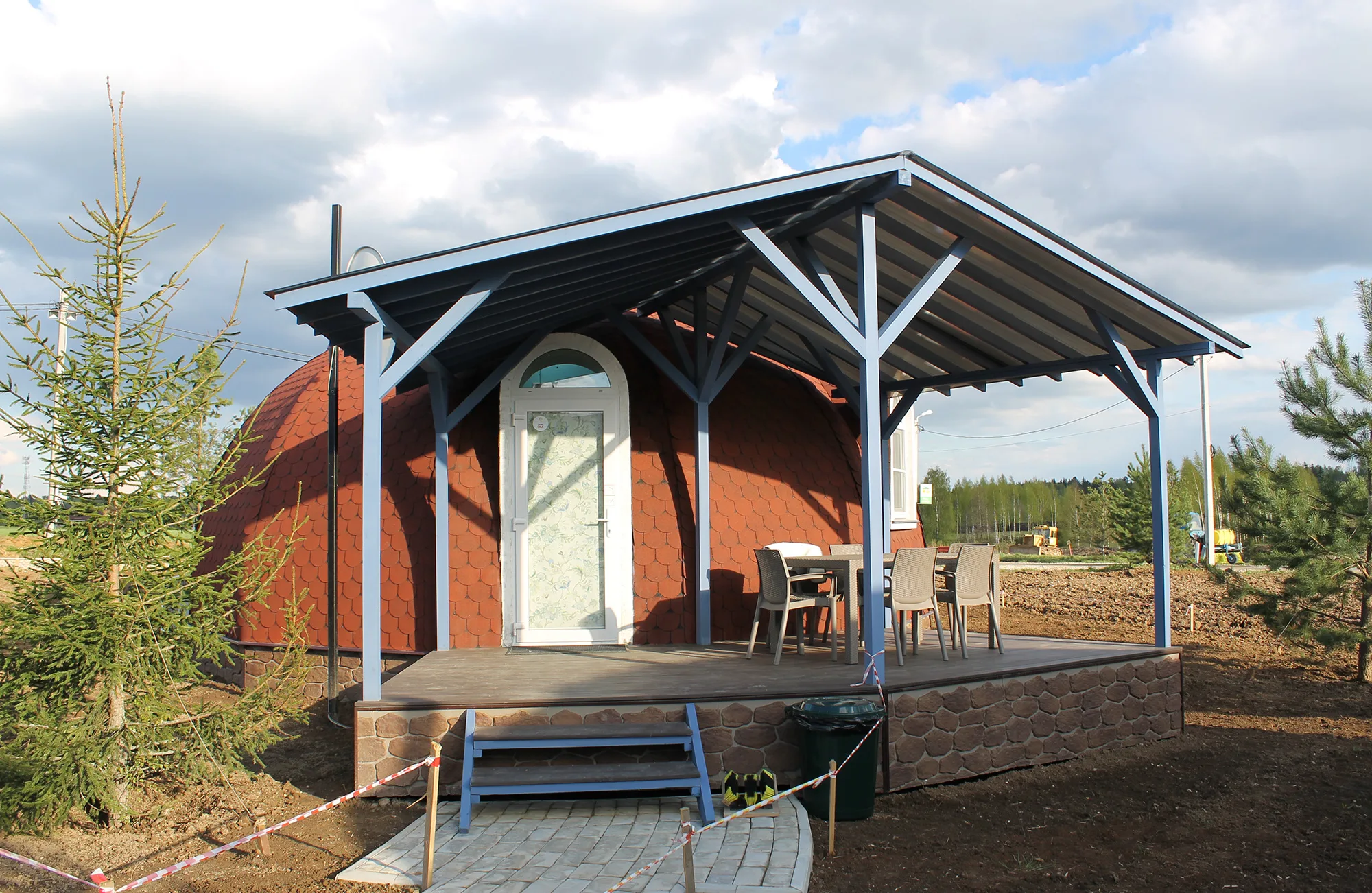
Prefabricated dome houses and structures built from standard elements are gaining traction in Russia thanks to their speed of construction, structural efficiency, and adaptability to a wide range of climates and uses. This article explains how such systems are produced, what materials and components are typical, how they adapt to Russian conditions, and what developers, homeowners and contractors should consider when choosing a supplier.
Why choose dome structures?
— *Structural efficiency*: a dome distributes loads evenly, making it highly resistant to snow and wind — critical across Russia’s varied climates.
— *Energy efficiency*: reduced surface-to-volume ratio lowers heat loss, improving heating economy in cold regions.
— *Speed of delivery and assembly*: prefabrication shortens on-site time dramatically.
— *Versatility*: suitable for housing, tourism (glamping), greenhouses, warehouses, gymnasia, and emergency shelters.
— *Aesthetic and marketing value*: distinctive look for projects targeting niche markets.
Typical standard elements and materials
— Ribs / rings / frames: steel (galvanized, painted), laminated timber (glulam), or composite ribs prefabricated in repeatable segments.
— External cladding panels: insulated metal panels (sandwich panels), fiber-reinforced polymer (FRP) skins, or ventilated wooden facades.
— Insulation layers: PIR / PUR foams, EPS/XPS, mineral wool — chosen by required thermal resistance (U-value).
— Secondary framing and connectors: CNC-cut steel brackets, bolted connections, epoxy joints for composites.
— Windows and doors: factory-made modules or custom curved units; triple glazing recommended for cold regions.
— Sealants & gaskets: high-performance EPDM / silicone weather seals for airtightness.
— Finish components: interior liners (plywood, OSB, gypsum), service cavities for wiring/plumbing.
Production workflow (typical)
1. Concept & standard design selection — choose a model/size from a kit of parts.
2. Engineering adaptation — structural checks for local loads (snow, wind, seismic) and thermal calculations.
3. CAM/CNC preparation — cutting ribs, panels and connectors to tolerances.
4. Factory assembly & QA — partial assembly or mock-up, leak testing, fire-safety checks.
5. Packaging & logistics planning — rail/road routes, oversized load permits.
6. Delivery to site — modules delivered just-in-time.
7. On-site assembly — mechanical joining of segments, sealing, utilities hookup.
8. Finishing works — cladding details, interiors, HVAC.
Typical lead times: factory production 4–12 weeks; on-site assembly for small units 1–7 days; finishing 1–8 weeks depending on scope.
Adapting domes to Russian climate zones
— Northern / Arctic / permafrost: use pile foundations, thick insulation (multi-layer, minimize thermal bridges), mechanical ventilation with heat recovery and freeze-protected plumbing.
— Siberia / cold continental: high R-values, triple-pane glazing, robust snow-load-rated ribs and smooth external surfaces to shed snow.
— Central and European Russia: standard insulated envelopes, conform to local snow/wind norms; consider summer overheating mitigation (ventilation, shading).
— High-wind coastal areas: aerodynamic dome shape plus reinforced anchoring and corrosion-resistant coatings.
Foundations and site work
— Options: slab on grade with thermal break, driven or helical piles, pile-raft systems for weak soils.
— Key considerations: frost depth, soil bearing capacity, site access for transport and cranes, drainage to prevent snowmelt pooling.
— For relocatable designs: simple anchor systems enabling future disassembly and reinstallation.
Logistics and assembly in Russia
— Use rail for long-distance transport to Siberia and the Far East; road haulage for regional delivery. Coordinate with local authorities on oversized loads.
— Assembly teams: supplier crews or trained local contractors; modular kits reduce dependence on skilled labor.
— Crane requirements are modest for most prefab dome kits, but verify lifting points and weight of large segments.
Applications and market opportunities
— Year-round residential and vacation homes
— Glamping and eco-tourism (rapid site installation, visual appeal)
— Agricultural structures and greenhouses (optimum light distribution)
— Event spaces, sports halls, warehouses and emergency shelters
— Scientific stations and observatories in remote areas
Advantages vs. traditional construction
— Faster construction cycles — accelerated time-to-occupancy.
— Lower on-site labor and waste — factory-controlled quality.
— Better envelope performance per unit of material used.
— Design repeatability and scalability through standard elements.
Limitations and challenges
— Perception and regulatory familiarity — some municipalities may require additional documentation.
— Customization beyond the standard kit can increase cost and lead times.
— Transport constraints for very large modules in remote regions.
— Long-term maintenance planning for seals, coatings and insulation integrity, especially in harsh climates.
Certification, standards and safety
— Ensure supplier engineering complies with Russian building codes (СНиП/СП) and local regulations for snow, wind and seismic loads.
— Ask for fire-safety documentation for materials used and certificates for electrical systems.
— Request thermal performance calculations and, if possible, an energy passport (энергопаспорт) or equivalent performance verification.
Practical buyer checklist
— Verify engineering documentation for local load cases and insulation performance.
— Inspect factory like or request photo/video of production and QA processes.
— Confirm transport plan, site access requirements, and who carries out assembly.
— Check warranties for structure, envelope and coatings; learn about post-sale service.