Introduction
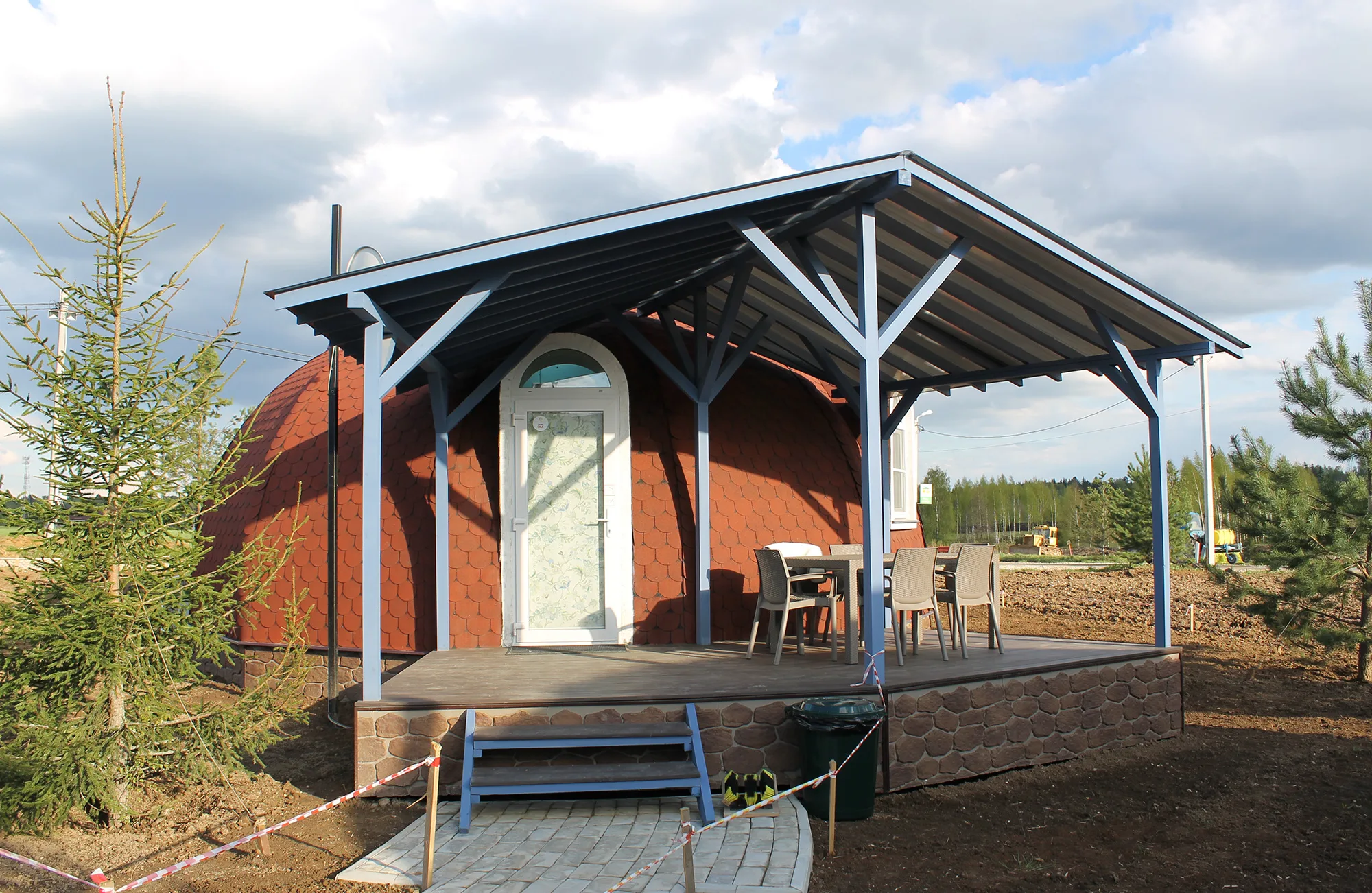
Prefabricated dome houses — assembled from repeatable, standard elements — combine speed of construction, cost predictability, and excellent structural and thermal performance. For Russia’s varied climate and vast geography, domes offer compelling advantages: superior snow shedding, wind resistance, efficient volume-to-surface ratio and huge potential for off-site mass production.
What are prefabricated dome structures from standard elements?
These are buildings composed of a limited set of factory-made components (arches, ribs, ring beams, panels, nodes, bases) designed to be combined into domes of different diameters and heights. Standardization enables:
— Rapid production and inventory management
— Faster on-site assembly with fewer skilled workers
— Modular scalability and repeatable quality control
Key advantages for the Russian market
— *Climate resilience*: natural geometry reduces snow accumulation and performs well in extreme winds.
— *Thermal efficiency*: smaller external surface per enclosed volume cuts heating costs — crucial for cold regions.
— *Speed*: off-site manufacturing + quick on-site assembly reduces exposure to short construction seasons.
— *Cost control*: standardized parts lower material waste, simplify logistics and reduce labor expenses.
— *Versatility*: suitable for year-round housing, temporary or permanent shelters, glamping, community centers, greenhouses, and industrial covers.
Design and engineering considerations for Russia
— Comply with Russian building codes (SP, GOST) and EAEU certification requirements. Early coordination with local design authorities accelerates approvals.
— Account for snow load and ice accretion in the northern and high-altitude regions; design redundant load paths.
— Thermal performance must meet local requirements (insulation, thermal bridges, vapor control) and be adapted to permafrost where applicable.
— Foundation choices vary: shallow slab, pile foundations for permafrost, or adjustable pedestal systems for seasonal ground movement.
— Design for transport limits (road/rail), especially for remote regions (max module dimensions, weight).
Standard elements and typical materials
Common standardized components:
— Prefabricated ribs/arches (steel, glulam or laminated timber)
— Circumferential ring beams and node connectors
— Insulated sandwich panels (SIPs, mineral wool, polyurethane)
— External cladding (metal, composite panels, fiber-reinforced polymer)
— Transparent modules (curved glazing, polycarbonate)
— Base frames and adjustable footings
Materials selection:
— Steel: durable, high strength, good for long spans; must be protected against corrosion.
— Glulam/CLT: excellent thermal performance and aesthetic; may require protective cladding in harsh climates.
— SIPs/PU panels: fast assembly and high insulation values.
— GFRP/FRP: lightweight, corrosion-resistant for coastal/industrial sites.
Typical manufacturing process
1. Engineering of modular kit (standard sizes, joint details).
2. CNC cutting and prefabrication of ribs, panels and nodes.
3. Factory assembly of sub-modules for QA and fit-checks.
4. Surface treatment (hot-dip galvanizing, painting, coating).
5. Packaged shipment of labeled elements and assembly instructions.
6. On-site assembly using light cranes and small crews; joinery and sealing; utilities integration.
Factory, tooling and QC needs
— CNC routers, press brakes, welding stations, gluing ovens (for timber), panel laminators.
— Test rigs for node strength, panel thermal and acoustic testing.
— Inventory system for serialized components and spare parts.
— QA protocols aligned with SP/GOST and EAEU certification testing.
Logistics and on-site assembly in Russia
— Design element sizes to fit standard rail/road transport and regional constraints.
— Centralized production hubs (Moscow region, Ural, Siberia) reduce long hauls; or mobile kits for remote sites.
— Use pre-marked elements and numbered assembly sequences to reduce on-site skill requirements.
— Typical on-site crew: 6–12 workers plus light equipment for a medium-sized dome (50–200 m²) — assembly time 1–3 weeks depending on complexity.
Regulatory & certification
— Prepare documentation for structural safety, fire safety, thermal protection and materials according to Russian regulations.
— EAEU conformity marking (if applicable) and local municipal approvals are needed for permanent housing.
— Engage local engineering firms to produce stamped design calculations for permit submission.
Market opportunities and applications
— Affordable rural and suburban housing in cold regions.
— Seasonal or permanent tourist accommodations (eco-resorts, glamping).
— Emergency and humanitarian shelters in disaster-prone areas.
— Agricultural structures (greenhouses, storage) and small community facilities.
— Industrial covers and sports domes.
Business model and cost considerations
— Two primary models: kit sales (client self-build or local contractor) and turnkey delivery (factory + assembly).
— Initial capital: setting up a medium production line requires investment in machinery, tooling and certified testing — scale lowers unit cost.
— Unit costs vary widely with materials and finishes; standardized small domes can be competitive with conventional small houses due to lower labor/time.
— Consider offering financing options, leasing, or turnkey-ready packages for faster market entry.
Sustainability and lifecycle
— Domes use less material per enclosed area and have lower heating demand.
— Design for disassembly: reuse or recycle standard elements at end of life.
— Use locally sourced timber/glulam where possible to reduce embodied carbon and support local supply chains.
Challenges and mitigation
— Transporting large elements across long distances: mitigate with modular sizing and regional hubs.
— Regulatory complexity across regions: maintain local partnerships and pre-approved standard solutions.
— Cold-joint thermal bridging: implement continuous insulation and tested node details.
— Workforce training: provide assembly manuals, training videos and on-site supervision.
Implementation checklist (quick)
— Define target products and markets (size ranges, permanent vs seasonal).
— Develop modular standard element catalog and structural node designs.
— Build prototype and perform load/thermal testing.
— Secure factory space, tooling and supply chain for materials.
— Obtain regulatory approvals and EAEU/local certifications.
— Pilot a local project, document assembly, refine logistics.
— Scale production and open regional service/assembly hubs.
Conclusion
Prefabricated dome systems composed of standard elements are a strong fit for Russia: they combine resilience to snow and wind, energy efficiency, rapid deployment and scalable manufacturing. With careful engineering to meet Russian standards, smart logistics, and a focus on modularity, such a production line can deliver attractive housing and specialized structures across the country.
If you’d like, I can draft:
— a sample standard-element catalog with dimensions and materials, or
— a high